Genre Jumper: Meg Medina

Meg Medina

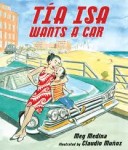
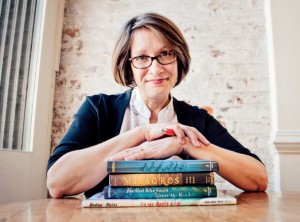
It is hard to talk about Meg Medina without gushing. She’s generous, wicked smart, and the kind of electric that makes you think that it might make sense to keep a drier sheet in your pocket, just in case of shocks. She started Girls of Summer with Gigi Amateau to emphasize strong female characters in fiction. Her own strong character, Piddy, is at the center of last year’s Yaqui Delgado Wants to Kick Your Ass, which earned Meg a Pura Belpré award. And CNN recently named Meg as one of its 10 Visionary Women. Plus, she’s  one of the Olympians who jumps genres in her writing, penning, among others: The Girl Who Could Silence the Wind, a YA, and the picture book Tía Isa Wants a Car, illustrated by Claudio Muñoz. She was kind enough to answer some questions between deadlines.

Which came first: Chicken or egg, picture book or novel?

Novel.

What was the first thing you published? (And yes, I mean EVER.)

Ever?  A poem for adults. My first published piece was titled Bella Lechuga, a woman’s name that translates literally to Beautiful Lettuce in Spanish. After that, I wrote short stories and essays, and I usually got “paid” in copies.

When did you publish something in a different form?

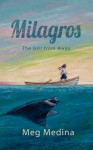
Almost from the start, but I started writing a middle grade novel in 2005. Eventually, it became MILAGROS: GIRL FROM AWAY (Henry Holt 2008, click here to learn about the ebook.)

Are you a one-project-at-a-time person, or do you mix it up? How easy to you find it to go back and forth between different forms?
I am usually a one-project-at-a-time person, at least for drafting. I get so involved in the voice of the narrator that I have trouble even re-entering real life. However, once you start publishing, you have projects at different stages of completion. You don’t have much choice about dabbling in more than one project when things are moving through production. So, for example, this week I was working on a rough draft of a YA novel when copyedits came through for a picture book. It gave me whiplash.
Are there themes or places that you tend to explore, both in your writing for your readers and your writing for older ones?

Regardless of age, I like to write about strong girls, and I like to explore Latino culture in all its varieties.

 Speaking of Latino culture: You’ve been a big advocate for diversity in children’s literature, appearing on panels and joining in the dialogue on Facebook and Twitter.  What can parents and young readers do to help solve the lack-of-diversity problem?

The most important thing is to buy books or borrow books from the library that include people of all races and ethnicities. Ultimately, it’s an incredible gift to young people to help them experience stories with all sorts of characters at the helm. It represents their world as it actually is. But equally important is that investing in a multicultural library also means that you help these books flourish.  Publishers and bookstores speak a language called Dollars. If excellent multicultural books move on the shelves, publishers have more reason to publish more of them.

Editor’s note: This past week saw an Internet call to action on this very subject. Visit this site to be a part of it.

What age group do you enjoy writing for the most? If you can’t choose (I know I can’t) let me know what you like/don’t like for each form.

What I LOVE about:

Picture book:  It’s poetic in that it’s a big story told with evocative language and a small word count.

Middle grade:  The mix of brains and innocence that have to go into the characters.

Young adult:  I like exposing the ugly underbelly of growing up. YA is the perfect place for that.

What has writing in one format taught you about the other?

That you have to respect what the reader is able to bring to the story in terms of their development.

Is there a genre you’d like to try that you haven’t tried yet?

You know, I’ve always wanted to write something funny. I love to laugh, and I love the sound of kids laughing. I’d consider myself really accomplished if I could make somebody snort milk out of their nose.

Is there a language you’d like to publish in that you haven’t yet?

So far, it’s only been Spanish and English – and only for Tía Isa Wants a Car. I’d be satisfied with having all my books available in those two languages so that Latino families could enjoy the stories together, regardless of how fluent anybody is in English.

Other than that…it might be cool to hear “Yaqui Delgado Wants to Kick Your Ass” in Chinese.

Editor’s note: I asked my friend Laura if she could make a recording of the title in Chinese so Meg could hear what it sounded like. Laura’s husband, Ximin Fang, is actually the one doing the talking here. They say this is a “loose translation”: 

You can find out more about Meg at her web site, megmedina.com, or follow her on twitter at @megmedina.
 

Posted in author interview, genre jumpers, middle grade, picture books, writing, ya | 4 Comments

Reading Backwards

I can’t tell you the number of times Mary and I have read Dream Boy. This weekend, we’re reading it again — it’s our last weekend to make changes before the book becomes a book. A little bleary-eyed (water in the basement, pet in the hospital, etc.) so to make sure we can still catch final-hour mistakes and typos, we’re reading through the ARCs forwards and backwards. Mary gets the forwards part; I get the backwards part. Not sure how that’s going to go, but here’s hoping we emerge Monday morning with crossed T’s and dotted I’s!

Posted in Uncategorized | Leave a comment

Tower of Lincoln

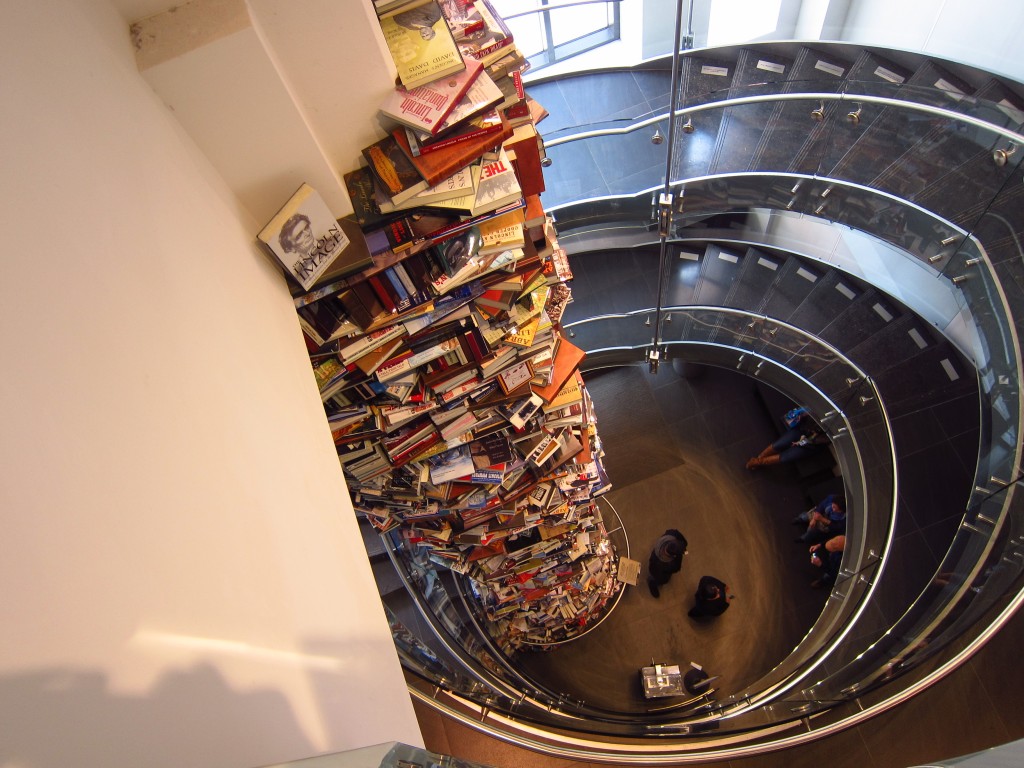
Went to Ford’s Theatre this weekend, and to the Peterson House across the street, where President Lincoln died. It got me thinking about a lot of things: race, the presidency, safety, acting and spurs, to name a few. It got me thinking a lot more about archiving and the people behind it — who made the decision to save Lincoln’s clothes? The pillow with the blood? Bits of the nooses that were used to hang Booth’s coconspirators? Did someone sell those as souvenirs? And what about the things they didn’t save?

On the way out, we passed the tower of books that had been written about Lincoln. I’d love to see towers of books on other subjects, too. Tea parties? Dreams? Star Wars? (I will also note that I didn’t spy picture books on Lincoln in this stack, but that I didn’t obsessively search, so I will just trust they were in there somewhere….)

Tower of Lincoln books

Posted in Uncategorized | Leave a comment

Three Bean Salad

I returned recently from a workshop at the Highlights Foundation where we focused on minor characters and transitions. The workshop was led by Jan Cheripko, who gives his own minor characters their proper due in Imitate the Tiger and other fine books.

For me, the workshop was a great balance between my own private writing time and learning with (and from) others as we looked at characters in Shakespeare — the master, Cheripko says, of the minor character. I’m not going to give away too much, as Highlights will likely offer this workshop again. But here’s one takeaway: Every character counts. And while this is something I knew, it’s also something I sometimes forget.

If you’ve never been to the Highlights Foundation, for either a workshop or a retreat, I highly recommend that you go. And if you have been? GO BACK! I can’t say enough about the staff, the meals, and the TLC. Plus, they have an ice cream bar, people. Baskets of fruit and candy. Also, Cheetos, which, I am not ashamed to say, I ate.

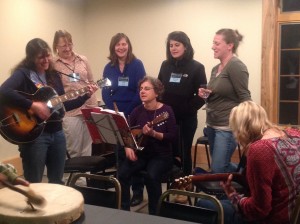
Jamming with friends at the Highlights Foundation. Photo by Jan Cheripko

The workshop was a good balance of other things, too. For one, I succumbed to the pressures of Deborah Prum and brought my guitar. And then I played it. With real, live people. And then I opened my mouth and sang. As I cannot carry a tune in a bucket, some of my best friends have never heard me sing, but here’s the thing:

When you’re showing other people your writing, you are taking a risk. You are making yourself vulnerable. You are being brave. And the distance between that and singing in front of someone else suddenly didn’t seem so far. To quote Debby, who is pretty much a walking, talking Nike commercial: Life’s short. 

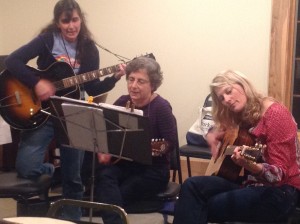
Three Bean Salad. Photo by Jan Cheripko

We called our group Three Bean Salad because two of us favored songs that only had three chords in them. (I will note that they didn’t have to be the same three — Liz Harris and I just preferred to skip songs that included B…) I’m pretty sure someone died in every song but Wagon Wheel and Jolene.

The quote you always hear in the music world is that all you need is three chords and the truth. I’ve heard that attributed to Springsteen, Willie Nelson and U2, who have all seem to have said it. But likely the first person to put that together was Harlan Howard, who wrote a few of my country favorites: Pick Me Up on Your Way Down and Heartaches by the Number. Three chords and the truth makes a good mantra for writing, too, I think. At the very least it would keep me from over-complicating my plot?

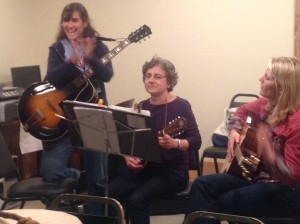
Something was funny. Perhaps it was my singing. Photo by Jan Cheripko

Posted in Uncategorized | Leave a comment

Genre Jumper: Kate Ormand aka Kate Louise

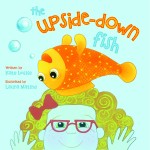
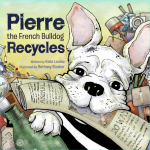
In the months ahead, the UK’s Kate Ormand will be publishing books in different kid lit genres, but unless you look closely, you won’t realize that. That’s because Kate is publishing under two different names. Her dystopian YA, Dark Days, can be found under Kate Ormand. Her picture books, The Upside Down Fish and Pierre the French Bull Dog Recycles, are coming out under Kate Louise. Two names. Two web sites. Even two twitter accounts. But just one Kate.

Me: What made you decide to go with two names and how is it working for you?
Kate: I wanted to keep the two mostly separate. My YA novels are quite dark, whereas the picture books are quite sweet and good fun. It made sense to me at the time to write picture books as Kate Louise and YA as Kate Ormand.

Me: Which came first: picture book or novel?

Kate: Novel. I love reading and writing YA so much and that was always my goal. My agent suggested experimenting with writing picture books as she writes them herself. I gave it a go while DARK DAYS was out on submission, the PB sold, and I enjoyed it, so I did it again!

 Me: Which is coming out first?

Kate: DARK DAYS will be my first published work, in June. The two picture books will follow in 2015.
Me: Are you a one-project-at-a-time person, or do you mix it up? How easy to you find it to go back and forth between different forms?

Kate: My main focus is usually just on the one project if possible. But as soon as that is out of my hands and with my agent or editor then I move on to playing with other ideas and working on other things. I find it easy to switch between projects if I take a minute to refresh my memory of the world and the characters and read a little bit of the work. Hopping between YA and PB is a little harder, but I just need to read something I’ve written in whatever style and I’m back in the zone!

Me: Are there themes or places that you tend to explore, both in your writing for your readers and your writing for older ones?

Kate: The character’s journey in both is important. My picture books have gentle messages and happy outcomes. My YA might not be quite as cheerful but it’s that conclusion, where the character has achieved something or found themselves or learned something that shines through in both.

Me: What age group do you enjoy writing for the most? 

Kate: That’s tough. Both have their ups and downs. I probably enjoy YA most because it’s so exciting creating something I love so much. However it can be really hard going and I often get the feeling that I’m never going to make it to the end! With picture books I don’t get that feeling as much because they’re so short, but I do feel the pressure as there’s a lot to squeeze in to a much, much smaller word count. Seeing the illustrations is amazing, too! I love both.

Me: What has writing in one format taught you about the other?

Kate: Plotting, perhaps. Because there’s such small word count in a PB and you have to get your concept, voice, theme, and story into fourteen spreads. So I guess that helps when planning a novel, which can get a lot more complicated the more the word count grows. I feel every piece of writing, whatever it is, is beneficial to me. I learn from everything I do.

Me: Is there a genre you’d like to try that you haven’t tried yet?

Kate: I’d love to write some middle-grade. I’m playing with an idea at the moment while I’m in between projects.

To read more about Kate, visit her websites at kateormand.wordpress.com and katelouiseauthor.wordpress.com. She also has two twitter accounts: @kateormand  and @katelouisebooks


Posted in author interview, genre jumpers, writing, ya, young adult | Tagged , , , | Leave a comment